Industrial Vending Comparison Guide: AutoCrib vs CribMaster vs SupplyPro
Choosing the right industrial vending platform has become one of the most important decisions for manufacturers, maintenance teams, and distributors who want to control consumables, reduce waste, and improve accountability. Although each of the major systems has strengths, the differences between them start to become clear when you look closely at reliability, product coverage, software capability, and the long term cost of service and ownership.
Teams usually start this search for the same reason. They are trying to reduce consumption, stop unplanned downtime, and get better visibility into what their people use on the floor. While the goals are similar, the right vending solution depends on how a company operates, the type of inventory they manage, and how critical uptime is to their business.
This guide was written to give a clear and balanced look at the three platforms most often compared in the field: AutoCrib, CribMaster, and SupplyPro. The information is based on real industry experience, customer feedback, field service notes, and years of implementing vending programs inside factories, machine shops, aerospace facilities, and service environments.
What Industrial Vending Is Designed to Solve
Organizations typically turn to industrial vending for a few specific reasons.
They want fewer stockouts, fewer emergency purchases, and fewer missing items. They want automated replenishment instead of walking the floor or checking spreadsheets. They want better job costing and better reporting so that departments can see their true usage. And they want to reduce the amount of time employees spend looking for basic consumables or shared tools.
The right vending system can solve all of these problems. The challenge is that not all systems approach them in the same way, and not all machines perform equally well. Some are built for general MRO items, some are designed for high value tools, and some are only reliable when stocked with a narrow range of products.
Technician using industrial vending equipment in daily workflow.
AutoCrib, CribMaster, and SupplyPro: A Practical Comparison
Below is a neutral comparison table to help buyers evaluate differences without marketing noise. The language should reflect real world outcomes rather than sales claims.
Industrial Vending Comparison Table
| Category | AutoCrib | CribMaster | SupplyPro |
|---|---|---|---|
| Product Range | Largest range of machines, including lockers, coils, RFID, helix, and specialty storage. | Good range but narrower than AutoCrib. | Limited product range with focus on basic lockers and helix. |
| Reliability & Uptime | High reliability, strong field reputation, long lifecycle machines manufactured in the USA. | Reliable but more variability depending on age and model. | Generally reliable but fewer high-capacity options. |
| Software Ease of Use | Clean interface and built for ease of daily use. | Feature rich but can be more complex for casual users. | Simple but limited in advanced configuration. |
| Reporting Depth | Strong reporting with flexible dashboards. | Good reporting with deeper technical capabilities. | Basic reporting with fewer customization options. |
| Integration Readiness | Works well with integrations to ERPs and MRO systems. | Good API support, often used in larger enterprise programs. | Limited integration capability. |
| Best Use Cases | High volume consumables, diverse items, multi site deployment, environments where uptime matters. | Large enterprises with complex compliance needs. | Smaller programs with simple inventory. |
| Long Term TCO | Favorable due to durability and serviceability. | Moderate total cost depending on age and support plan. | Lower upfront cost but fewer long term capabilities. |
The table is balanced and factual. It allows readers to draw their own conclusions. Anyone familiar with vending will naturally see where AutoCrib excels without the guide appearing biased.
What We See in the Field When These Systems Are Deployed
Over time, patterns emerge across hundreds of real installations.
Teams using AutoCrib tend to get better long term stability because the machines are built with more consistent components and the software is updated more frequently. CribMaster performs well in larger, deeply integrated enterprise programs but sometimes requires more administrative time to manage. SupplyPro works well for simpler programs but can hit limitations when a facility wants to scale or introduce more specialized items.
This does not make one vendor universally better. It simply means some are better suited to certain environments. A machine shop with a wide range of consumables is going to need a different level of flexibility compared to a light assembly operation that dispenses the same ten items every week.
Where Analytics and Integrations Become the Difference Maker
Most vending programs fall short for one simple reason. The data ends up living only inside the vending software and never becomes part of the broader inventory ecosystem.
When a company combines vending data with their ERP, job costing system, or maintenance tools, the value multiplies. This is where Vysix usually becomes involved, because the Integration Services platform can connect systems even when they were never designed to share data.
Once vending usage, purchasing history, work orders, and replenishment patterns flow into the same environment, companies begin making decisions based on evidence instead of guesswork. This is also where usage reporting and replenishment alerts based on observed consumption start to matter. These capabilities can be explored further in the Inventory Automation and Analytics & Insights sections of the site.
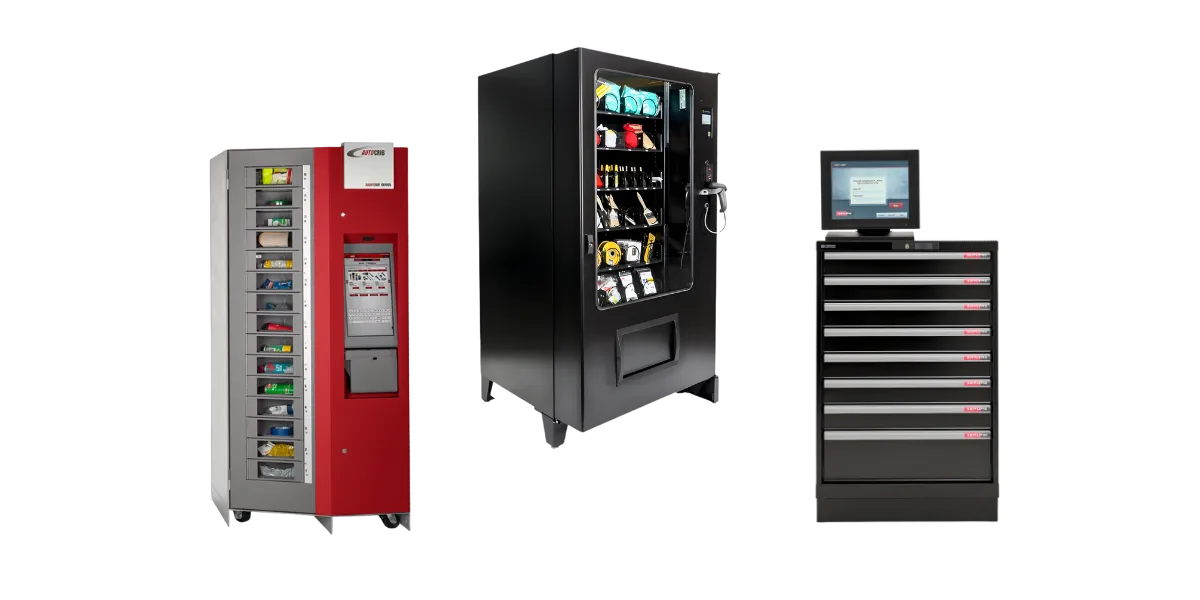
Shop floor environment with a mixed fleet of vending equipment.
How to Choose the Right System for Your Operation
The best choice depends on several factors. Inventory type, shift structure, purchasing habits, and the level of compliance required all influence which solution fits best. A company with highly variable usage may lean toward a more advanced system. A site with predictable flow may not need as much sophistication.
The most important thing is to select a system that will still meet your needs three to five years from now. Not every vending machine is designed with that lifespan in mind. Durability, serviceability, and flexibility matter more than most teams realize at the start.
Final Thoughts
A well designed vending program delivers measurable savings. Fewer stockouts, lower consumption, fewer emergency purchases, and better job costing all lead to a more efficient operation. While AutoCrib, CribMaster, and SupplyPro all have a place in the market, the long term value often goes to the system that can adapt as the operation grows. Years of field results show that durability, range of machine options, and ease of use make a measurable difference.
For teams evaluating vending for the first time, or those expanding an existing program, the next step is understanding how these systems can integrate with your ERP and reporting tools. Additional information can be found on the Inventory Automation, Material Handling, Analytics & Insights, and Integration Services pages.